

Channel3 vs Exa
TL;DR: Exa is a search API built for AI agents and LLMs — neural, semantic search across the open web, used for things like research assistants, RAG pipelines, and general-purpose agent tooling. It is not built for shopping.
Channel3 is a structured product database purpose-built for commerce — 100M+ products across 25,000+ retailers, normalized schema, real-time price and availability, and monetization built in.
If your agent needs to find and cite information from the web, Exa is a strong choice. If it needs to find, compare, and transact on real products, you need product infrastructure — not a general search index.
Different tools, different jobs
Exa’s pitch is “search built for AI” — an API that returns semantically relevant web content instead of the ten blue links model of traditional search. That makes it a strong fit for research tools, coding agents pulling documentation, and RAG systems that need to ground an answer in real web content. It’s general-purpose by design: the same API that helps an agent research a topic is the one returning results for anything else you throw at it, including product queries.
That generality is also the limitation for shopping specifically. A web search result is not a product record. It doesn’t come with normalized price, live inventory, variant options (size, color, SKU), a clean image, or a merchant relationship that supports a transaction. Returning a search result that mentions a couch isn’t the same as returning structured data that lets an agent actually compare couches or complete a purchase.
Channel3 is built for exactly that gap. Every product is a structured record — not a page to parse — with the fields a shopping agent actually needs: price, availability, variants, images, merchant, and commission data where relevant. It’s commerce infrastructure, not a general index that happens to include shopping content.
Live comparison
Full comparisonOne shopping query, sent at the same time. Channel3 returns products. Exa returns pages.
Results for “nike pegasus”
Channel3
…
Products
 Exa
…
Web pages
Channel3 vs. Exa
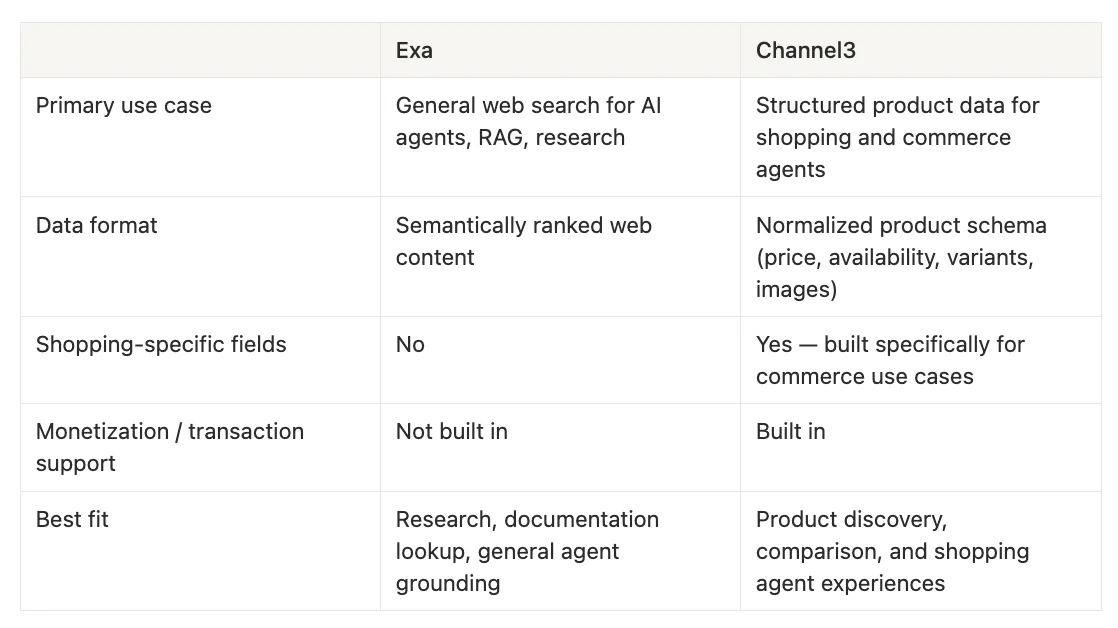
Primary use case — Exa: General web search for AI agents, RAG, research. Channel3: Structured product data for shopping and commerce agents.
Data format — Exa: Semantically ranked web content. Channel3: Normalized product schema (price, availability, variants, images).
Shopping-specific fields — Exa: No. Channel3: Yes — built specifically for commerce use cases.
Monetization / transaction support — Exa: Not built in. Channel3: Built in.
Best fit — Exa: Research, documentation lookup, general agent grounding. Channel3: Product discovery, comparison, and shopping agent experiences.
FAQ
What is Exa used for?
Exa is a search API designed for AI agents and LLMs, providing semantic web search for use cases like research assistants, retrieval-augmented generation (RAG), and general-purpose agent tooling.
Is Exa a good fit for shopping or ecommerce AI agents?
Exa is general-purpose web search, not a product-specific data layer. It can surface web pages that mention products, but it doesn’t provide the structured, normalized product data — price, availability, variants — that a shopping agent needs to compare or transact.
What’s an alternative to Exa specifically for product and shopping data?
Channel3 is a structured product database purpose-built for commerce: 100M+ products across 25,000+ retailers, with the normalized schema and monetization infrastructure that general-purpose search APIs like Exa aren’t built to provide.
Newsletter
Get new posts in your inbox
Field notes from the rapidly changing world of AI commerce